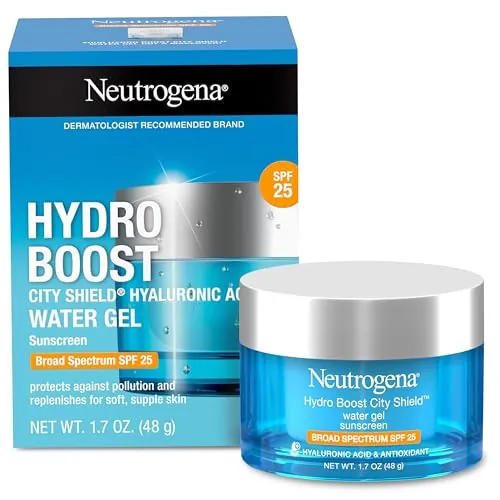
#1 Overall Winner
Neutrogena Hydro Boost City Shield Water Gel Face Moisturizer with Broad Spectrum SPF 25, 1.7 oz
- Built-in SPF 25 for daily sun protection alongside moisturising.
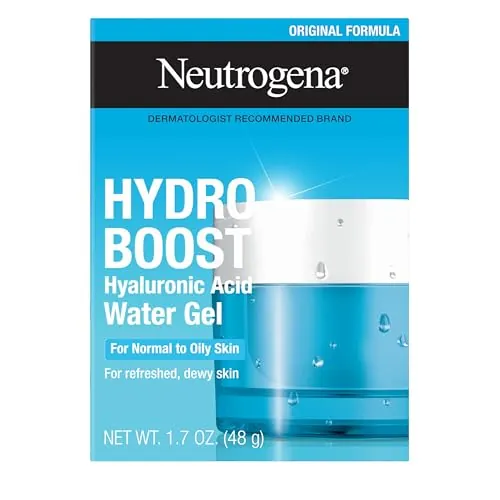
Comparison
Neutrogena Hydro Boost City Shield is a lightweight water-gel moisturiser with broad spectrum SPF 25, while Neutrogena Hydro Boost Water Gel focuses on long-lasting hydration (no SPF listed in the provided data). Both are oil-free, non-comedogenic gel moisturisers with hyaluronic acid, designed to feel light and wear well under makeup. Overall scoring favors Hydro Boost Water Gel for comfort, finish, longevity, and ease of use, but City Shield can be the better pick if you want moisturising and daytime SPF in one step.
#1 Overall Winner
Contender
Choose Hydro Boost Water Gel if you want the best lightweight hydration experience—higher comfort, smoother finish, and longer-lasting feel in the scores and reviews. Choose Hydro Boost City Shield SPF 25 if you want a simple daytime moisturiser that also provides broad spectrum SPF in the same product. If fragrance is a concern, read recent reviews carefully for both.
Overall winner
Depends on your needs
| Feature | Neutrogena Hydro Boost City Shield Water Gel Face Moisturizer with Broad Spectrum SPF 25, 1.7 oz | Neutrogena Hydro Boost Water Gel, 24 Hr Hydration, 1.7 oz | Winner |
|---|---|---|---|
| Category / main use | Daily moisturiser + broad spectrum SPF 25 |
Daily gel moisturiser focused on hydration |
Depends |
| Overall score | 84 |
88 |
Neutrogena Hydro Boost Water Gel, 24 Hr Hydration, 1.7 oz |
| Effectiveness score | 86 |
90 |
Neutrogena Hydro Boost Water Gel, 24 Hr Hydration, 1.7 oz |
| Finish / look (beauty result) | Beauty result 84; finish quality 83 |
Beauty result 88; finish quality 90 |
Neutrogena Hydro Boost Water Gel, 24 Hr Hydration, 1.7 oz |
| Longevity (wear/hydration) | 78 |
86 |
Neutrogena Hydro Boost Water Gel, 24 Hr Hydration, 1.7 oz |
| Ease of use | 88 |
94 |
Neutrogena Hydro Boost Water Gel, 24 Hr Hydration, 1.7 oz |
| Scent score | 45 |
68 |
Neutrogena Hydro Boost Water Gel, 24 Hr Hydration, 1.7 oz |
| Skin compatibility score | 78 |
76 |
Neutrogena Hydro Boost City Shield Water Gel Face Moisturizer with Broad Spectrum SPF 25, 1.7 oz |
| Customer satisfaction | 89 (4.7/5; 10,013 reviews) |
92 (4.6/5; 88,286 reviews) |
Neutrogena Hydro Boost Water Gel, 24 Hr Hydration, 1.7 oz |
| Value score | 80 |
78 |
Neutrogena Hydro Boost City Shield Water Gel Face Moisturizer with Broad Spectrum SPF 25, 1.7 oz |
On effectiveness, Hydro Boost Water Gel scores higher (90 vs 86), suggesting it more consistently delivers on its main purpose—lightweight hydration that lasts. Reviews repeatedly mention quick absorption, non-greasy feel, and skin feeling moisturised through the day.
Hydro Boost City Shield is also rated effective, but its performance is split between moisturising and sun protection. It’s often praised for being light, hydrating, and makeup-friendly, yet its overall interpretation flags drawbacks like the modest SPF 25 level and some reports of odor or burning. If you want hydration first, Water Gel leads; if you want hydration plus daytime SPF, City Shield is the more targeted product.
Both products aim for a fresh, hydrated look rather than a heavy cream finish. City Shield is often described as leaving a subtle dewy appearance and working well under makeup, which makes it appealing for morning routines. Hydro Boost Water Gel, however, scores higher for beauty results (88 vs 84) and finish quality (90 vs 83), aligning with reviews that mention a smooth, healthy glow and a weightless feel.
If your “beauty result” includes having sunscreen built into the look and routine, City Shield’s SPF is a practical advantage. If you care most about the most consistently smooth, comfortable, non-greasy finish, Water Gel has the edge in scoring.
Hydro Boost Water Gel leads on the beauty result score (88 vs 84) and finish quality (90 vs 83), indicating a more consistently smooth, polished “skin looks good” outcome. Review language often highlights glow, smoothness, and a clean, weightless finish.
City Shield still performs well for a hydrated, subtly dewy look, and its ability to sit under makeup is a recurring benefit. The main “result” advantage for City Shield is practical: when you use it, you’re also getting SPF 25 in the same layer—useful if you’re trying to simplify morning steps.
From a skincare routine perspective, both are straightforward hydrating moisturisers built around hyaluronic acid and positioned as non-comedogenic. The key difference is that City Shield adds broad spectrum SPF 25 and is described as including antioxidants to help address daily aggressors like pollution, making it more of a daytime “all-in-one” step.
Hydro Boost Water Gel is more purely hydration-focused, with “24-hour hydration” and moisture barrier support claims in the description. If you already use a dedicated sunscreen, Water Gel can slot in easily; if you want fewer morning layers, City Shield is the more streamlined option.
Hydro Boost Water Gel scores higher for safety (82 vs 72). While both are everyday leave-on moisturisers, City Shield is used like a sunscreen-moisturiser hybrid, so proper application matters: the product directions specify applying generously and evenly 15 minutes before sun exposure. City Shield also has mixed reports including burning sensations, which can be relevant for reactive users.
Water Gel has fewer “warning flag” notes in the provided data, but it’s still not risk-free—there are breakout complaints and fragrance is a common sensitivity issue. For either product, consider patch testing and avoid applying too close to the eyes if you know you’re prone to stinging.
Hydro Boost Water Gel leads on comfort (91 vs 83). Reviews repeatedly highlight a weightless, non-sticky feel and quick absorption, which tends to improve all-day comfort—especially for normal-to-oily skin.
City Shield is also frequently described as light and non-greasy, but the lower comfort score and reports of burning for some users make comfort more variable. If your priority is the most consistently comfortable gel texture, Water Gel is the stronger pick in the scoring.
Both are simple, daily moisturisers, but Hydro Boost Water Gel scores higher for ease of use (94 vs 88). That fits its straightforward “apply after cleansing” routine and fast-absorbing gel texture.
City Shield adds SPF to the step, which can reduce routine complexity overall, but correct sunscreen-style application (generous amount, even coverage, timing before sun exposure) can take more attention than a standard moisturiser. If you want the easiest application experience, Water Gel leads; if you want fewer products in the morning, City Shield may still feel simpler.
Hydro Boost Water Gel scores higher for application (92 vs 86), suggesting more consistent spreadability and blend-in. Reviews commonly describe it as absorbing quickly and leaving little residue, which helps when layering makeup.
City Shield is also praised for quick absorption and non-greasy wear, but application can be more “purposeful” because it’s also your SPF step. If you need a reliable, fast base layer, Water Gel is the higher-scoring choice; if you want a moisturiser that can double as a sunscreen layer, City Shield remains compelling.
Skin compatibility is close, with City Shield slightly higher (78 vs 76), but neither product is universally problem-free in the provided feedback. City Shield’s aggregated overview includes some reports of burning sensations, even though others describe it as gentle. That makes patch testing especially sensible if you’re reactive or using it near sensitive areas.
Hydro Boost Water Gel is also mixed: many users report no irritation, but others report breakouts, and the “signature fragrance” is a common point of debate. If you’re sensitive to fragrance or prone to congestion, your experience may depend heavily on personal tolerance and how you layer it with other products.
Hydro Boost Water Gel wins on finish quality (90 vs 83). It’s consistently described as non-greasy and quick to absorb, leaving skin smooth and comfortable—helpful both for bare-skin days and under makeup.
City Shield still delivers a pleasing finish for many users (often described as subtly dewy), but it scores lower overall and has more scent-related negatives in the provided data. If you prioritize the most “invisible,” refined gel finish, Water Gel is the safer bet; if you like a touch of dew plus SPF, City Shield may suit you better.
For longevity, Hydro Boost Water Gel is ahead (86 vs 78). That aligns with its “24-hour hydration” positioning and frequent review comments about all-day moisturised feel. City Shield is also reported to keep skin hydrated, and customers mention sun protection lasting several hours, but its longevity score suggests a less consistent all-day experience compared with Water Gel.
If you want fewer touch-ups during the day, Water Gel is the stronger pick in the scoring. If your main goal is daytime moisturising with SPF built in, City Shield can still work well—just don’t expect it to replace longer-wear hydration for everyone.
Scent is a bigger issue for City Shield (scent score 45) than for Hydro Boost Water Gel (68). City Shield has negative odor feedback in the provided reviews (including a “petroleum” smell complaint), even though not everyone mentions it.
Hydro Boost Water Gel is explicitly described as having a “signature fragrance,” and reviews are split—some find it clean and pleasant, others say it’s heavily scented. If fragrance sensitivity is a concern, Water Gel may still be risky, but City Shield appears more problematic on scent scoring.
Durability scores are the same (74 vs 74). For jar moisturisers, “durability” is mainly about the product staying usable and the packaging holding up in daily life. The provided data includes some packaging complaints for Water Gel and some negative feedback on City Shield’s scent/experience, but not enough detail to call one clearly more stable over time.
If you travel often, a jar can be more prone to mess than a pump; storing at stable temperatures and keeping lids tightly closed can help for either product.
City Shield scores higher for personalization (70 vs 60), mainly because it’s positioned for all skin types and combines hydration with SPF 25, which can fit more daytime routines in one product. Water Gel is more specifically targeted to normal, oily, and combination skin and is centered on hydration only.
That said, personalization is also about tolerance: Water Gel’s signature fragrance and occasional breakout complaints can narrow fit for some users, while City Shield’s burning/odor feedback may do the same. If you’re unsure, consider starting slowly and patch testing either option.
Ingredient quality scores are very close: City Shield scores 79 and Hydro Boost Water Gel scores 78. Based on the provided information, both center on hyaluronic acid and are positioned as lightweight, non-comedogenic hydration. City Shield is additionally described as oil-free and alcohol-free and includes antioxidants, while Water Gel emphasizes being dermatologist- and allergy-tested and includes “clinically proven” hydration claims.
Because full ingredient lists are not provided here, it’s not possible to validate detailed formula comparisons beyond what’s stated. If you’re ingredient-sensitive (especially to fragrance), checking the full INCI list before purchase remains important.
Packaging scores are close: Water Gel is slightly higher (72) than City Shield (70). Both are jar-style products in the provided data, which some users find convenient but others find less hygienic than pumps. Water Gel has at least one packaging-related complaint (“damaged packaging”), while City Shield highlights an eco-minded carton change (removing a window/plastic tray) for easier recycling.
If packaging reliability is your main concern, neither stands out as a clear winner; consider where you buy from and check return policies in case of damage or leakage.
Prices are identical in the provided data ($19.97 for 1.7 oz), so value comes down to what you’re getting for that price. City Shield scores slightly higher for value (80 vs 78), likely because it combines moisturiser plus broad spectrum SPF 25—potentially replacing a separate morning product for some routines.
Hydro Boost Water Gel can still be excellent value if hydration performance and comfort are your priorities: it scores higher for effectiveness, longevity, finish, and ease of use. If you already buy sunscreen anyway, Water Gel’s stronger “wear experience” may justify the same spend.
Both products are from Neutrogena, but the provided brand trust score is higher for Hydro Boost Water Gel (84 vs 76). That may reflect the very large review base and consistently strong performance scoring.
City Shield remains well-rated and widely used, but its lower brand trust score and reported issues (odor, burning for some users) can reduce confidence for certain shoppers. If you want the safest “default” pick within this comparison, Water Gel has the stronger trust signal in the provided scores.
Customer satisfaction favors Hydro Boost Water Gel (92 vs 89), and it has a much larger review count (88,286 vs 10,013). Despite a slightly lower star rating (4.6 vs 4.7), the bigger sample suggests consistently positive day-to-day experiences for many users—especially around texture, absorption, and hydration.
City Shield also performs strongly with high ratings and many reviews, and it’s often praised for being light and non-greasy with added sun protection. The most repeated negatives to watch across the provided feedback are scent complaints and occasional burning sensations for City Shield, and fragrance strength and breakout reports for Water Gel.
Hydro Boost Water Gel scores higher for claim support (83 vs 78). Its description includes “clinically proven” 24-hour hydration and barrier-strengthening after one use, plus dermatologist- and allergy-tested language—though the underlying study details are not provided here.
City Shield’s claims (broad spectrum SPF 25, hydration with hyaluronic acid, antioxidant support for daily aggressors) are straightforward and plausible as product features, but the interpretation notes mismatched expectations for some users and the SPF level may not meet everyone’s daily preference. In both cases, customer reviews can support experience but do not replace clinical evidence.
Ethical/transparency scoring is higher for City Shield (68 vs 55). The City Shield listing includes a specific packaging change (“removed the window and plastic tray from this carton for easier recycling”), which is a concrete sustainability-related detail.
For Hydro Boost Water Gel, no comparable sustainability or ethical details are provided in the product data here. Since broader ethical claims (cruelty-free/vegan, etc.) are not provided for either product, this comparison is limited to what’s explicitly stated.
Overall winner: Neutrogena Hydro Boost Water Gel (88 vs 84). It scores higher for hydration performance, finish quality, longevity, comfort, and ease of use, and it has very strong customer satisfaction across a huge review base. Its main limitations in the provided data are polarising fragrance, occasional breakout reports, and the lack of SPF.
Neutrogena Hydro Boost City Shield SPF 25 is the better choice if you specifically want a moisturiser that also provides broad spectrum SPF 25, with a lightweight, makeup-friendly feel. Its main limitations are the modest SPF level for some preferences, lower safety scoring, and more negative scent/irritation reports. If SPF-in-one-step matters, City Shield can still be the smarter fit.
Overall winner
Depends on your needs
Based on the provided scores, Neutrogena Hydro Boost Water Gel rates higher overall (88 vs 84) with stronger comfort, finish, longevity, and ease of use. However, City Shield is the more convenient choice if you specifically want built-in broad spectrum SPF 25 in the same step. The “better” option depends on whether SPF-in-moisturizer is a must for your routine.
From the provided product data, the Hydro Boost Water Gel is described as a hydrating moisturizer (with “24-hour hydration” claims) and does not list SPF. A review also explicitly notes that any listing text suggesting SPF is incorrect. If you choose this product, plan to apply a separate sunscreen during daytime.
Neutrogena Hydro Boost City Shield is the clear choice for daily sun protection because it includes broad spectrum SPF 25 and is positioned as a hydrating facial sunscreen/moisturizer. The Hydro Boost Water Gel focuses on hydration and does not provide SPF in the provided information, so it won’t replace sunscreen on its own.
Both products are frequently described as lightweight and fast-absorbing, and City Shield is specifically described as wearable under makeup. Hydro Boost Water Gel scores higher for finish quality (90 vs 83) and application (92 vs 86), which suggests a smoother cosmetic base for many users. If you also want SPF under makeup, City Shield adds that benefit.
Both are positioned for oily/combination routines: City Shield is described as suitable for all skin types and is oil-free/non-comedogenic, and Water Gel is explicitly targeted to normal/oily/combination skin. Score-wise, Water Gel leads in comfort (91) and finish quality (90), while City Shield’s advantage is combining hydration with SPF 25.
Neither product is guaranteed to suit sensitive skin. City Shield’s aggregated feedback includes some burning reports, and its skin compatibility (78) and safety score (72) are lower than Water Gel’s safety score (82). Water Gel still has mixed skin reactions (including breakout complaints) and has a signature fragrance that some users find strong, which can be a sensitivity consideration.
Scent is a key difference. City Shield has a low scent score (45) and includes negative odor feedback in reviews. Hydro Boost Water Gel has a higher scent score (68) but fragrance is still polarising: some describe it as pleasant and clean, while others say it’s heavily scented. If you prefer minimal fragrance, check recent reviews carefully before buying.
They are priced the same in the provided data ($19.97 for 1.7 oz). City Shield’s value score is slightly higher (80 vs 78), likely reflecting the added SPF functionality in one product. Water Gel has stronger performance scores (effectiveness, comfort, longevity), which can still make it feel like better “value” if you already use a separate sunscreen and prioritize hydration and texture.
Check our rankings and expert guides to find the best beauty products for your goals.