#1 Overall Winner
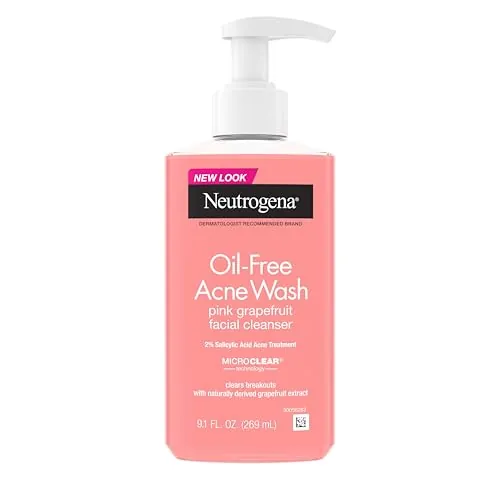
Neutrogena Oil-Free Acne Wash Pink Grapefruit Facial Cleanser
- High customer satisfaction supported by a 4.6/5 rating from 26,808 reviews.
Comparison
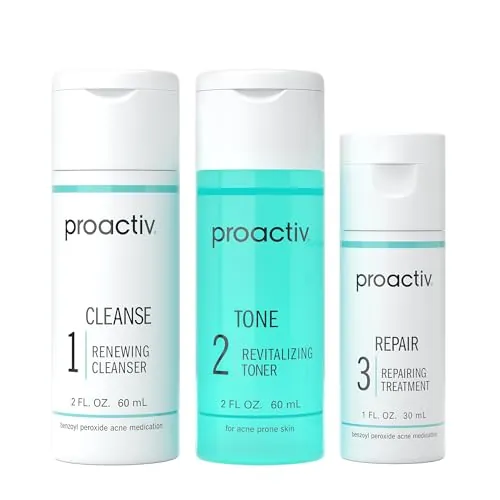
Neutrogena Oil-Free Acne Wash is a low-cost salicylic-acid cleanser for oily, acne-prone skin, while Proactiv is a higher-priced three-step kit built around cleansing, toning, and treatment. Both score equally for effectiveness and visible results, but Neutrogena leads for value, comfort, packaging, and customer satisfaction. Proactiv is the more comprehensive routine; Neutrogena is the simpler everyday option. Dryness and irritation are potential drawbacks with either choice.
#1 Overall Winner
Contender
Choose Neutrogena for a simpler, lower-cost salicylic-acid cleanser with stronger value and satisfaction data. Choose Proactiv if you want cleanser, toner, and treatment in one routine and are willing to manage a higher price and possible dryness. Neither is a clear fit for users who already react easily to acne-care products.
Overall winner
Depends on your needs
| Feature | Neutrogena Oil-Free Acne Wash Pink Grapefruit Facial Cleanser | Proactiv 3 Step Acne Treatment | Winner |
|---|---|---|---|
| Product format | Single facial cleanser | Three-step 30-day kit | Depends |
| Listed active ingredient | Salicylic acid | Benzoyl peroxide | Depends |
| Overall score | 82 | 78 | Neutrogena Oil-Free Acne Wash Pink Grapefruit Facial Cleanser |
| Effectiveness | 84 | 84 | Tie |
| Beauty results | 80 | 80 | Tie |
| Skin compatibility | 62 | 58 | Neutrogena Oil-Free Acne Wash Pink Grapefruit Facial Cleanser |
| Comfort | 64 | 55 | Neutrogena Oil-Free Acne Wash Pink Grapefruit Facial Cleanser |
| Ease of use | 89 | 86 | Neutrogena Oil-Free Acne Wash Pink Grapefruit Facial Cleanser |
| Scent | Grapefruit | Unscented | Depends |
| Packaging quality | 84 | 68 | Neutrogena Oil-Free Acne Wash Pink Grapefruit Facial Cleanser |
| Value | 88 | 62 | Neutrogena Oil-Free Acne Wash Pink Grapefruit Facial Cleanser |
| Customer satisfaction | 91 | 83 | Neutrogena Oil-Free Acne Wash Pink Grapefruit Facial Cleanser |
| Claim support | 82 | 77 | Neutrogena Oil-Free Acne Wash Pink Grapefruit Facial Cleanser |
Neutrogena and Proactiv are tied at 84 for effectiveness. Neutrogena's reported strength is its daily oil and impurity removal in an oil-free salicylic-acid cleanser; many reviewers say it helps them keep breakouts under control. Proactiv's strength is its broader three-step format, and several reviews describe visible improvement when the regimen is used consistently. The data does not show one product working reliably for everyone: both have mixed reports, and one Proactiv review notes less satisfactory results for more persistent breakouts. Customer experiences should not be treated as guaranteed outcomes.
Both products have a beauty-result score of 80, so the available scoring does not establish a visible-result winner. Neutrogena reviewers often describe skin that feels fresh and clean, while Proactiv reviewers commonly mention clearer-looking, smoother, or more glowy skin after consistent use. In both cases, the cosmetic result can be limited by dryness or redness for some users. The better option depends on whether a simple cleanse or a full treatment routine produces the more comfortable result in an individual's routine.
The products are tied at 80 for beauty results. Neutrogena is associated in reviews with a refreshed, clean appearance and a smoother-feeling finish after washing. Proactiv has reports of clearer-looking skin, smoother texture, and glow, which may appeal to people seeking a more comprehensive routine. However, redness, dryness, and irritation appear in feedback for both products, and these effects can work against the intended visible result. There is no score-based winner here.
Neutrogena functions as a daily cleansing step, whereas Proactiv covers cleansing, toning, and leave-on treatment within one kit. Neutrogena's oil-free salicylic-acid format is the more streamlined option for an existing routine. Proactiv may appeal to buyers who prefer a predefined sequence, but it asks more of the skin and of the user's consistency. Both products are marketed for oily, acne-prone skin, and both should be assessed carefully if dryness or sensitivity is already a concern.
Neutrogena has the higher safety score, 65 compared with Proactiv's 56. Both products are applied to facial skin and have recurring feedback about dryness or irritation, so following label directions and monitoring comfort is important. Neutrogena reviewers mention burning and sensitivity reactions in some cases. Proactiv's listing itself notes possible early dryness, slight flaking, and irritation, while reviews also mention burning and redness. Avoid treating buyer reviews as a substitute for individual guidance, and discontinue use if a concerning reaction occurs.
Neutrogena leads on comfort, 64 to Proactiv's 55. Positive Neutrogena reviews describe a smooth, fresh feeling and a light grapefruit scent, though some users feel stripped or tight afterward. Proactiv's unscented format avoids a fragrance preference issue, but its routine receives more reports of dryness, flaking, and burning. The score data favours Neutrogena, but neither product has uniformly positive comfort feedback.
Neutrogena has a slight ease-of-use advantage, 89 versus 86. Its process is direct: apply to wet skin, massage gently, and rinse. Proactiv is described as easy to follow by several reviewers, but a cleanser, toner, and treatment naturally involve more steps and more daily commitment. Choose Neutrogena for the least complicated routine; choose Proactiv if you value having a pre-arranged multi-step system.
Neutrogena scores 85 for application, ahead of Proactiv at 79. The cleanser is applied with fingertips to a wet face and rinsed, which makes it practical for shower or sink use; one reviewer also specifically praised the convenient pump bottle. Proactiv requires use of three separate products, which offers more routine coverage but adds application time. The simpler cleanser format gives Neutrogena the advantage for low-effort, repeatable use.
Neutrogena scores 62 for skin compatibility, ahead of Proactiv at 58, but neither score removes the need for caution. Neutrogena reviews are divided: some users find it non-drying, while others report tightness, roughness, burning, redness, or reactions. Proactiv feedback similarly includes dryness, flaking, burning, irritation, and redness, particularly as the routine is introduced. The supplied data therefore favours Neutrogena slightly, but users with easily irritated skin may find that neither is an automatic fit.
Both products score 78 for finish quality. As rinse-off or treatment skincare rather than colour cosmetics, the relevant finish is the skin feel and appearance after use. Neutrogena is frequently described as leaving skin fresh and clean, while Proactiv reviews include reports of smoothness and glow. On the other hand, tightness, roughness, flaking, redness, and dryness are reported for some users. The practical winner depends on which formula your skin tolerates comfortably.
Proactiv has a small longevity-score lead, 72 versus 70 for Neutrogena. For Neutrogena, this mostly relates to maintaining the usefulness of a daily cleansing product over regular use. Proactiv's three-product format may provide a more sustained routine structure, but it also requires consistent use and is supplied as a 30-day introductory set. The difference is modest, so product format and tolerance matter more than this score gap.
Neutrogena has a scent score of 77 and a grapefruit fragrance that many reviewers call light, fresh, or pleasant. Proactiv is listed as unscented, making it the more straightforward option for people who prefer no fragrance. Neutrogena's scent is a positive for shoppers who enjoy citrus notes, but it is not necessarily preferable for fragrance-sensitive users.
Neutrogena has a modest durability-score advantage, 72 versus 70. For these consumable skincare products, this score is most relevant to usable product life and packaging practicality rather than hardware reliability. Neutrogena's bottle format and stronger packaging score support its slight lead. Proactiv's separate starter products provide a complete routine but may be used up at different rates. The two-point difference is minor compared with the difference in value and routine format.
Proactiv has a small personalization advantage, 66 versus Neutrogena's 60. Its cleanser, toner, and repairing treatment give users more ways to organise an acne-care routine, and the listing positions it for teens and adults. Neutrogena offers a more focused choice: one grapefruit-scented, oil-free cleanser for oily skin. Neither product provides shades, scent variations within the compared format, or detailed skin-type customisation in the supplied data. Choose Proactiv for routine breadth and Neutrogena for simplicity.
Proactiv scores 76 for ingredient quality, narrowly ahead of Neutrogena at 74. The supplied data identifies salicylic acid in Neutrogena, alongside grapefruit extract and vitamin C in its specifications. Proactiv lists benzoyl peroxide as its active ingredient and glycolic acid as a special ingredient. These listings identify key ingredients but do not provide full formulas, concentrations for every ingredient, or comparative clinical evidence. The small score difference is not enough to show that one formula will be better tolerated or more suitable for every skin type.
Neutrogena leads packaging quality, 84 to Proactiv's 68. Its bottle format is convenient for daily cleansing, and a reviewer specifically noted that the pump is easy to use at the sink or in the shower. Proactiv comes as a three-product starter kit, which is practical for assembling a routine but has mixed value feedback around smaller bottle sizes. The data favours Neutrogena for dispensing convenience and packaging satisfaction.
Neutrogena is the clear value leader, scoring 88 compared with Proactiv's 62. At $9.97, it costs substantially less upfront than the $35.99 Proactiv 30-day kit, while also earning stronger customer satisfaction and the same effectiveness score. Proactiv includes three products, so its price reflects a broader routine rather than a like-for-like cleanser comparison. Still, feedback includes complaints about small bottle sizes, which weakens its value case. Choose Proactiv for the bundled system, not on the expectation of the lowest-cost option.
Neutrogena scores 80 for brand trust, ahead of Proactiv at 74. This score difference aligns with Neutrogena's stronger overall customer-satisfaction result in the supplied data. Proactiv also has a large review base and many positive reports, especially from users who value its established three-step format. The information provided does not include detailed support, manufacturing, or transparency comparisons, so brand trust should not outweigh personal skin tolerance and routine preference.
Neutrogena has the stronger customer-satisfaction score, 91 versus 83, and a 4.6/5 rating from 26,808 reviews. Customers often praise its fresh feel, cleansing performance, pleasant fragrance, and value. Its recurring complaints concern dryness, tightness, redness, burning, and sensitivity. Proactiv has a 4.5/5 rating from 49,483 reviews and many reports of clearer-looking skin and good routine results. However, irritation, dryness, small bottle sizes, and mixed value perceptions appear more prominently in its feedback. Both have substantial positive sentiment, with Neutrogena more consistent overall.
Neutrogena has the higher claim-support score, 82 compared with Proactiv's 77. Its listing clearly identifies a facial-cleanser format, oil-free positioning, and salicylic acid, while reviews commonly support a clean feel and use by oily, acne-prone users. Proactiv's listing specifies the components of its routine and benzoyl peroxide as an active ingredient, and many reviewers report positive experiences with consistent use. However, neither listing's promotional language nor individual buyer reports should be interpreted as proof that results will be universal. Tolerance and results remain variable.
Neutrogena Oil-Free Acne Wash is the overall winner in this comparison. It has the higher overall score, better value, higher customer satisfaction, stronger packaging quality, and a simpler application process, while matching Proactiv on effectiveness and visible-result scoring. Its main limitation is that a meaningful number of users report dryness, tightness, or sensitivity.
Proactiv is not a poor choice: its key strength is a complete three-step routine with positive reports from consistent users. Its main limitations are the higher cost, lower comfort and safety scores, and repeated feedback about dryness, irritation, and small starter sizes. Pick Neutrogena for a practical daily cleanser; pick Proactiv only if the broader regimen format is worth the additional commitment.
Overall winner
Depends on your needs
Neutrogena is the stronger overall choice in the supplied scoring because it has a higher overall score, better value, higher customer satisfaction, and better comfort and safety scores. Proactiv may suit people who specifically want a complete three-step system and are comfortable committing to a more involved routine. Both have strong reported effectiveness but can be drying.
Neutrogena is easier to use. It is a single facial cleanser applied to wet skin and rinsed away, and it has higher ease-of-use and application scores. Proactiv is still described by reviewers as simple to follow, but its cleanser, toner, and treatment steps require more time and consistency.
Neutrogena offers better value based on the supplied data. Its lower price and value score of 88 compare favourably with Proactiv's value score of 62. Proactiv includes three products, so the right comparison depends on whether a buyer wants a complete starter routine or only a daily cleanser.
Neither product is an obvious choice for highly sensitive skin based on the available feedback. Neutrogena has the higher skin-compatibility, comfort, and safety scores, but reviews still mention burning, dryness, and reactions. Proactiv also has repeated reports of dryness, flaking, redness, and irritation. Consider tolerance carefully and follow product directions.
No. Neutrogena lists salicylic acid as its active ingredient. Proactiv lists benzoyl peroxide as its active ingredient and also lists glycolic acid among its special ingredients. They therefore offer different product formats and ingredient approaches, so individual comfort and routine preferences matter.
The supplied beauty-result scores are tied at 80, so there is no data-led winner for visible results. Reviews for both products include reports of clearer-looking, smoother, or fresher-looking skin. However, each also has mixed feedback involving redness, dryness, or irritation that may affect the final cosmetic appearance.
It depends on whether the three-step format is useful to you. Proactiv includes a cleanser, toner, and repairing treatment, which may appeal to buyers seeking a coordinated routine. However, it costs more, has a lower value score, and receives mixed feedback about small bottle sizes. Neutrogena is the more economical single-cleanser option.
Neutrogena has the higher claim-support score, 82 versus 77 for Proactiv. Both listings describe products for acne-prone skin, and both have positive customer reports. Those reports reflect individual experiences rather than clinical proof. The supplied information does not establish that either product will produce the same results for every user.
Check our rankings and expert guides to find the best beauty products for your goals.