#1 Overall Winner
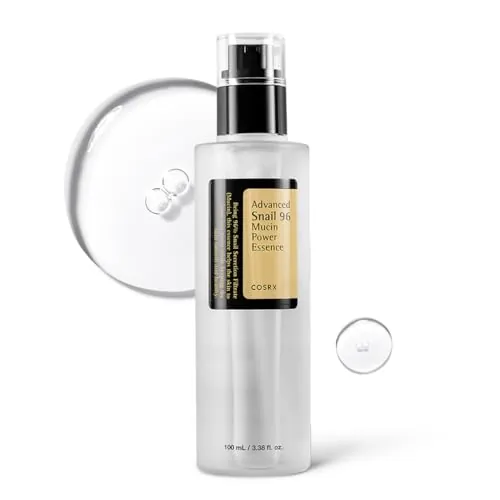
COSRX Snail Mucin 96% Repairing Serum
- Very strong overall score (91) with high perceived effectiveness (92) for hydration-focused use
Comparison
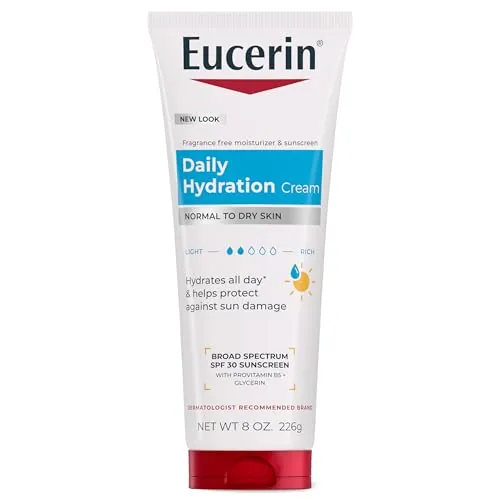
COSRX Snail Mucin 96% is a hydrating face essence/serum focused on glow and lightweight moisture, while Eucerin Daily Hydration SPF 30 is a body cream that combines moisturizing with Broad Spectrum sun protection. Both score very highly overall (91 vs 90) and are considered strong value, but they fit different routines: facial hydration layering versus a one-step body moisturizer + sunscreen.
#1 Overall Winner
Contender
Choose COSRX Snail Mucin 96% if you want a lightweight, glowy facial hydration step with strong value and huge buyer approval. Choose Eucerin Daily Hydration SPF 30 if you want an easy, non-greasy body lotion that also provides Broad Spectrum SPF 30 when used as directed. If you need both facial hydration and body sun protection, they can complement each other.
Overall winner
Depends on your needs
| Feature | COSRX Snail Mucin 96% Repairing Serum | Eucerin Daily Hydration Broad Spectrum SPF 30 Sunscreen Body Cream | Winner |
|---|---|---|---|
| Category / main role | Hydrating face essence/serum (snail mucin) |
Body moisturizer with Broad Spectrum SPF 30 |
Depends |
| Overall score | 91 |
90 |
COSRX Snail Mucin 96% Repairing Serum |
| Effectiveness score | 92 |
91 |
COSRX Snail Mucin 96% Repairing Serum |
| Beauty result score | 91 |
90 |
COSRX Snail Mucin 96% Repairing Serum |
| Finish quality | 90 |
92 |
Eucerin Daily Hydration Broad Spectrum SPF 30 Sunscreen Body Cream |
| Comfort | 84 |
92 |
Eucerin Daily Hydration Broad Spectrum SPF 30 Sunscreen Body Cream |
| Ease of use | 91 |
92 |
Eucerin Daily Hydration Broad Spectrum SPF 30 Sunscreen Body Cream |
| Ingredient quality | 88 |
78 |
COSRX Snail Mucin 96% Repairing Serum |
| Safety score | 81 |
84 |
Eucerin Daily Hydration Broad Spectrum SPF 30 Sunscreen Body Cream |
| Customer satisfaction | 97 (4.6/5; 103,548 reviews) |
96 (4.7/5; 10,688 reviews) |
COSRX Snail Mucin 96% Repairing Serum |
| Value score | 93 |
93 |
Tie |
Effectiveness is excellent for both, with COSRX at 92 and Eucerin at 91. COSRX’s effectiveness is driven by hydration-focused use: reviewers repeatedly mention smoother, softer, more hydrated-feeling skin and how well it layers with other steps. Eucerin’s effectiveness is split between moisturizing dry body skin and providing SPF 30 sunburn protection when used as directed; many users praise quick absorption, comfortable wear, and minimal white cast. The key difference is purpose—COSRX can’t replace sunscreen, while Eucerin is built around daily UV protection plus moisture.
For visible results, COSRX tends to be chosen for a hydrated, “glowy” facial finish—reviews often describe softer, smoother-looking skin and a glass-skin effect that sits well under makeup. Eucerin’s visible payoff is more about body skin looking moisturized without the typical sunscreen drawbacks; buyers frequently mention it absorbs quickly, feels lightweight, and avoids obvious white cast. If your “beauty result” goal is facial glow and plumpness, COSRX fits better; if it’s an even, comfortable body finish with SPF built in, Eucerin is the more functional option.
Beauty result scores are very close (COSRX 91, Eucerin 90). COSRX’s edge aligns with reviews describing a hydrated, fresh glow and a smoother-looking face finish. Eucerin’s results show up as a more “normal lotion” look despite being SPF—often noted as non-greasy and low cast, which can improve how body skin looks in daylight. If you judge beauty results by facial radiance, COSRX leads; if you judge by wearable body SPF finish, Eucerin is extremely competitive.
Both are skincare, but they support different steps and body areas. COSRX is a face-targeted essence for dryness and overall skin feel, often used morning and night as a layering step after cleansing/toner and before moisturizer (and under SPF in the daytime). Eucerin is a whole-body cream that combines hydration with SPF 30 Broad Spectrum protection, making it most relevant for daytime use on exposed areas. If you’re building a routine, COSRX fits as a hydrating “treatment-like” layer, while Eucerin fits as a daily body protect-and-moisturize step.
Eucerin scores slightly higher for safety (84 vs 81). As a sunscreen moisturizer, Eucerin includes clear usage directions (apply 15 minutes before sun exposure; reapply at least every 2 hours; use water resistant sunscreen if swimming or sweating), which supports safer real-world use. COSRX includes explicit patch-test advice and references irritation testing, but there are still mixed reports of irritation. Neither product is risk-free for every user—patch testing and avoiding eye contact are sensible precautions, especially given eye irritation feedback for Eucerin.
Eucerin is the comfort winner (92 vs 84). Reviews repeatedly describe it as lightweight, non-greasy, and easy to wear without that “sunscreen feel.” COSRX is often called lightweight and soothing too, but the signature mucin texture can be divisive—some find it comforting, others find it slightly sticky or slimy. If sensory feel is your top priority, Eucerin is more consistently comfortable across reviewers and scoring.
Both are very easy to use (COSRX 91; Eucerin 92). COSRX typically slots in as a quick face step after cleansing/toner and before moisturizer or SPF, and buyers mention it absorbs fast with minimal fuss. Eucerin’s advantage is simplicity: it combines moisturizing and SPF 30 in one step for the body, which can reduce routine friction. The easier choice depends on whether you prefer a multi-step face routine or a streamlined body application.
Eucerin slightly leads for application (91 vs 88). As a cream, it’s commonly described as spreading smoothly, absorbing quickly, and avoiding greasy residue. COSRX application is generally easy, but several reviews mention needing a moment to get used to the mucin texture and learning how best to apply it. If you want the most straightforward “apply and go” experience, Eucerin has the edge; if you don’t mind a unique texture, COSRX still applies efficiently.
Skin compatibility is tied at 82 vs 82, which signals “works for many, not all.” COSRX is described as hypoallergenic and dermatologist-tested, and it recommends patch testing; reviews are largely positive for sensitive skin but still include some irritation reports. Eucerin is fragrance free and dye free and positioned as safe for sensitive skin, yet its review overview notes occasional eye irritation. If you’re reactive, patch test either product and consider where you’ll apply (face vs body, and near the eye area or not).
Eucerin leads on finish quality (92 vs 90). Reviews commonly describe it as non-greasy and not leaving a noticeable white cast, which is a big win for an SPF body cream. COSRX also rates highly and is often described as lightweight with a healthy glow, but its mucin texture can feel tacky to some until it settles. If you’re picky about a clean, lotion-like finish on skin, Eucerin has the advantage; if you want a hydrated, dewy facial look, COSRX is still a strong performer.
Longevity scores are tied at 82 vs 82. For COSRX, longevity mostly shows up as hydration that lasts through the day when layered in a routine, with reviewers describing sustained comfort without heaviness. For Eucerin, longevity relates to moisturized body feel and the practical reality of sunscreen wear—directions emphasize reapplication at least every 2 hours for sun exposure. In practice, “lasting power” depends on your environment and whether you’re reapplying SPF as directed.
COSRX has the stronger scent score (90 vs 80). Many COSRX reviewers describe no noticeable scent, which can be helpful if you prefer low-scent face products. Eucerin is labeled fragrance free, but reviews sometimes mention a light sunscreen smell that fades quickly. If you’re highly scent-sensitive, COSRX appears to be the safer sensory choice, though individual perception can vary.
Eucerin leads on durability (86 vs 82). In this context, durability is less about “hardware” and more about product staying usable—packaging stability, consistent dispensing, and day-to-day reliability. Eucerin’s tube format and body-lotion use case often translates to steady, repeatable use. COSRX also performs well and has strong repurchase signals in reviews, but its score is slightly lower. Both appear stable, mainstream options rather than fragile or finicky products.
Personalization scores are close (COSRX 74 vs Eucerin 72). COSRX is labeled for all skin types and is commonly used as a flexible layering step, which can suit many routines. Eucerin is targeted more specifically at dry skin and whole-body use, which is straightforward but less “customizable.” Neither product offers shades or multiple finish options in the provided data; personalization is mainly about skin area (face vs body), climate, and sensitivity considerations.
COSRX scores higher for ingredient quality (88 vs 78). Its positioning is centered on a high percentage of snail secretion filtrate (96.3%) and a “simple yet effective” approach, which some users appreciate for routine compatibility. Eucerin’s formula highlights Pro-Vitamin B5 and Sunflower Oil within a sunscreen moisturizer base; it’s fragrance free and dye free, which can be a plus for many. Without full ingredient lists provided here, the comparison is score-led: COSRX appears stronger on ingredient-quality scoring, while Eucerin prioritizes a functional SPF-lotion format.
Packaging scores are close (COSRX 84 vs Eucerin 82). COSRX comes in a 100 ml bottle and reviewers commonly report it arrives in good condition and lasts well because a small amount is needed. Eucerin’s 8 oz tube is practical for body application and is often praised for its generous size. Neither stands out as a major packaging problem in the provided data; choice mainly comes down to whether you prefer a serum bottle or a squeeze tube for daily use.
Value is a tie: both score 93. COSRX costs more upfront than many basic lotions, but it’s a large 100 ml essence with extremely high buyer approval, and reviews frequently note that a little goes a long way. Eucerin is positioned as a low-budget, high-utility 8 oz body SPF moisturizer, and buyers often highlight cost per ounce and how long a tube lasts. The better value depends on your goal—face hydration “step” value versus daily body SPF convenience.
COSRX slightly leads on brand trust (88 vs 86). Both brands are well established in skincare categories, and both products show strong customer satisfaction signals. Eucerin is described as a dermatologist-recommended brand in the provided description, which may increase confidence for some shoppers. COSRX’s high review volume and repeat purchases also support trust. Overall, this is a close comparison with no major trust red flags in the provided data.
Customer satisfaction is extremely high for both (COSRX 97; Eucerin 96). COSRX has a massive review count (103,548) with frequent praise for hydration, smooth texture after absorption, and visible glow; the recurring negatives are texture preference and occasional irritation. Eucerin’s reviews (10,688) strongly emphasize non-greasy wear, minimal white cast, and everyday practicality, with occasional eye irritation and “too rich for face in hot weather” comments. In short: both are crowd-pleasers, with different complaint patterns.
Eucerin leads on claim support (90 vs 85). Its main claims are functional and usage-based—Broad Spectrum SPF 30, moisturizing dry skin, and directions for application and reapplication—making it easier to align expectations with real-world use. COSRX’s claims focus on hydration, soothing feel, and improving the look of dullness/fine lines; while many reviewers report smoother, glowier skin, that feedback is still consumer experience rather than clinical proof. Both are reasonably supported within the data, but Eucerin’s sunscreen claims are more concrete and instruction-led.
Ethical transparency differs meaningfully (COSRX 78 vs Eucerin 58). COSRX explicitly states “no snails are harmed” and describes obtaining snail mucin in an environmentally friendly way, which may matter to ethically minded shoppers. For Eucerin, no specific ethical or sustainability claims are provided in the supplied listing content. If ethical positioning is a deciding factor, COSRX provides more direct transparency in the given data.
This comparison doesn’t have a single universal winner because the products serve different needs. COSRX Snail Mucin 96% slightly leads overall (91) with excellent effectiveness and ingredient-quality scoring, and it’s best for people who want a dedicated, lightweight facial hydration layer that supports a glowy finish. Its main limitation is the divisive mucin texture and some mixed irritation feedback.
Eucerin Daily Hydration SPF 30 is the more practical daily body-care option: it combines hydration with Broad Spectrum SPF 30, scores higher for comfort and finish, and is widely praised for being non-greasy with minimal white cast. Its main drawbacks are occasional eye irritation reports and SPF 30 feeling modest for some users. Choose based on whether you’re building a face routine or simplifying daily body SPF.

Overall winner
Depends on your needs
COSRX scores slightly higher overall (91 vs 90) and is best if you want a dedicated hydrating face essence with a glowy finish. Eucerin is better if your priority is an easy, everyday body step that combines moisture with Broad Spectrum SPF 30 (sunburn protection when used as directed). The right pick depends on whether you need facial hydration or body SPF.
No. COSRX Snail Mucin 96% is a hydrating essence/serum and does not list SPF or UV protection in the provided data. If you’re using it in a morning routine, you’d typically apply a dedicated sunscreen on top. Eucerin Daily Hydration includes SPF 30 and is designed to provide Broad Spectrum UVA/UVB protection when used as directed.
Both are positioned for dryness. COSRX is aimed at facial dryness and hydration, with very high effectiveness (92) and value (93) scores and many reviews mentioning smoother, more hydrated-looking skin. Eucerin targets dry skin on the body and combines moisturizing with SPF 30; reviews frequently highlight soft, non-greasy hydration and minimal white cast.
Both products are described as suitable for sensitive skin, but experiences vary. COSRX includes patch-test guidance and has mixed irritation reports despite an 82 skin-compatibility score. Eucerin is fragrance free and dye free and is described as sensitive-skin safe, yet some users mention eye irritation. If you’re reactive, patch test and avoid getting Product B near eyes.
Eucerin scores higher for comfort (92 vs 84) and is repeatedly described as non-greasy and quick to absorb. COSRX is also often described as lightweight and fast-absorbing, but several reviews note a “snail mucin” texture that can feel slightly sticky or slimy at first. If texture sensitivity matters most, Eucerin may be the safer bet.
It’s a tie on the scorecard: both have a value score of 93. COSRX is 100 ml and has extremely high review volume, with many buyers saying a little goes a long way. Eucerin comes in a large 8 oz tube and is often described as a reliable budget option for daily body use with SPF. Value depends on whether you need a face serum step or body SPF.
Some reviewers report using it on the face, but it’s labeled as a body cream and may feel too rich on facial skin in hot weather. There are also occasional eye irritation reports, which can be more relevant when used on the face/neck area. If you try it on the face, patch test and be careful around the eye area.
Eucerin scores higher for claim support (90 vs 85), helped by clearly defined sunscreen directions and an SPF format with Broad Spectrum UVA/UVB positioning. COSRX claims focus on hydration, glow, and soothing feel, supported mainly by customer feedback and its mucin-forward formula. Neither should be treated as clinical proof; the scores indicate relative support in the provided dataset.
Check our rankings and expert guides to find the best beauty products for your goals.